
Geotab’s 2026 Forecast: An AI-Fueled Boom for Transportation Companies That Adapt
The job of truck drivers is at risk—at least in the long term. This is the stark assessment from Neil Cawse, CEO of Geotab, a global leader in telematics and fleet management, as he laid out his predictions for the approaching year 2026 and beyond.
According to Cawse, autonomy is nearing its own “AI moment,” a tipping point that Artificial Intelligence (AI) itself crossed this year. “I really do believe in the longer term, unfortunately, all truck drivers are in trouble,” Cawse warned. “We just need to see how long that period is.”
Cawse predicts low rates of AI adoption for two to three years, followed by a sudden acceleration in five to seven years. This process is driven by the rapid evolution of AI, which is crucial for autonomous driving.
AI as a Driver’s Co-Pilot (For Now)
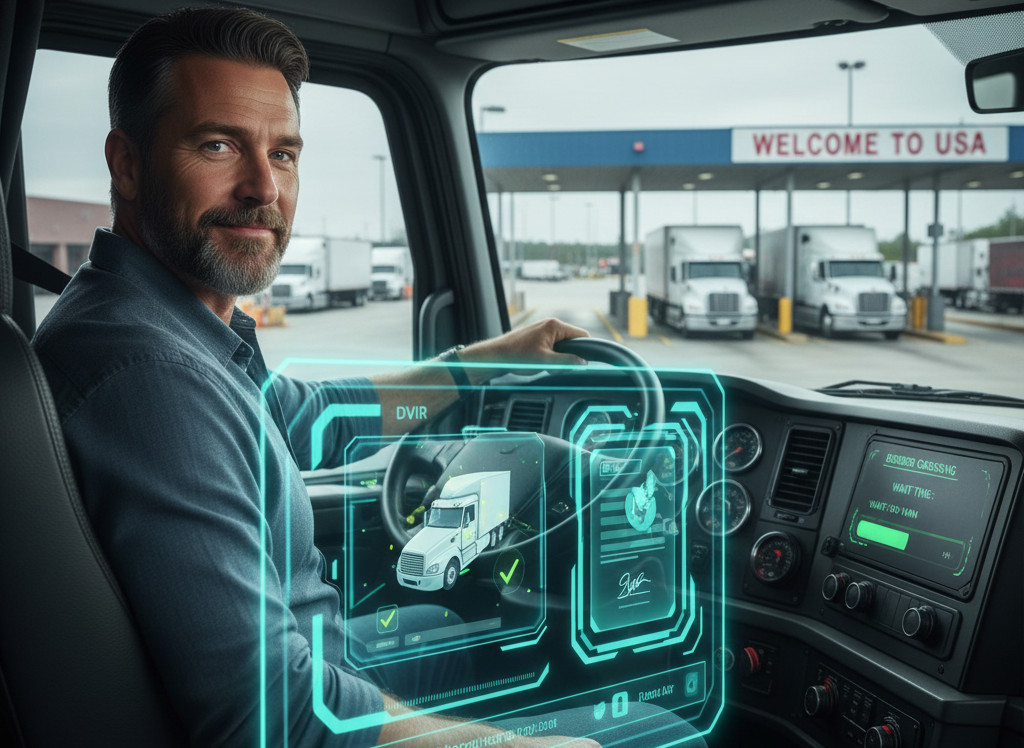
In the short term, AI is actually a positive for drivers as it relieves them of some duties. It will simplify DVIR (Driver Vehicle Inspection Reports) inspections through simple video recording of the truck, streamline applications, and automate processes at border crossings and weigh stations, significantly reducing wait times.
The benefits of AI adaptation will favor some more than others. “I’m quite bullish. I think the benefits will go to the very big companies first because they have more financial resources. Smaller companies will suffer in the shorter term, but then it all gets democratized,” Cawse said. “That’s the good side of AI: there will be AI-based startups that will deliver those services to smaller companies.”
This could spark an explosion among smaller players who leverage the power of AI, buy a few trucks, and transform them into a highly efficient business. However, he warned that these AI startups might quickly become obsolete.
The Shift: From AI Tool to Operational Partner
Cawse stated that 2026 will mark the end of AI as merely a tool and the beginning of AI as an operational partner managing core fleet processes. Companies that fail to integrate AI will be left behind.
Here are his recommendations for transportation companies:
Digitization is Key: Data is the food for AI. Companies that have their data on paper will have less chance to utilize AI, which will hurt them immensely.
Document Your Processes: Companies should create documents outlining their processes (e.g., managing a trucking company, vehicle maintenance, manager duties) to teach new AI models, rather than starting from scratch. The goal is to have “clean data sets” that you can simply “throw to the next AI,” saying: ‘Here’s the document. Go teach yourself.’
Become Your Own AI Expert: Regularly using AI and understanding prompt engineering is crucial.
The K-Shaped Economy
Cawse predicts that AI will shape the economy in an unprecedented way. It will create a K-shaped economy, felt simultaneously as a recession and a boom. This happens because some companies will quickly gain an advantage through AI efficiency, while others will not.
The beneficiaries of AI will start at the top (NVIDIA, Google) and then move down to companies like Geotab, which handle massive amounts of data. “I’m absolutely convinced that three, five years from now, we’ll have an absolutely roaring economy because every single company in the world can benefit from AI,” Cawse concluded.
Safe travels and wide roads from All About Trucks & Translab! We put Truckers first!
