
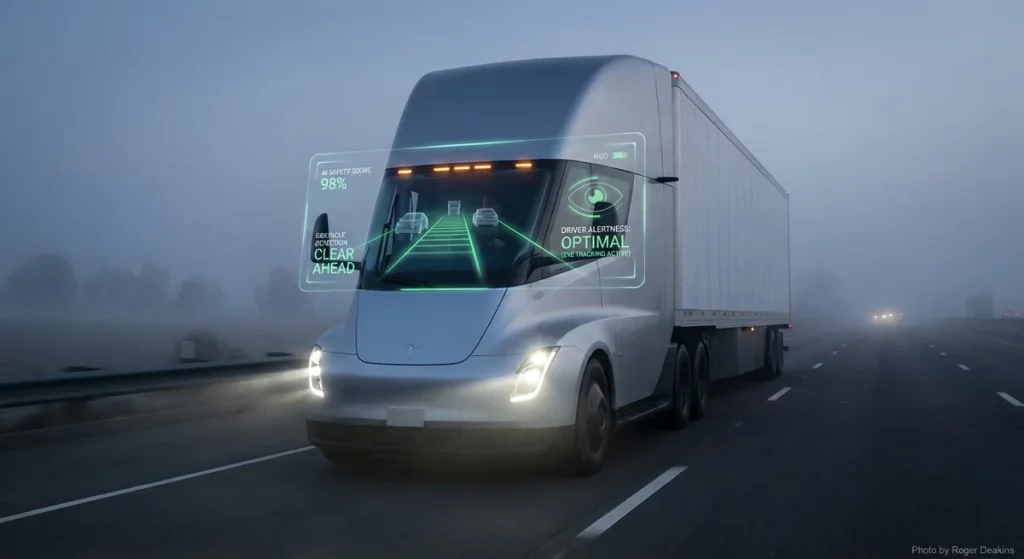
The Road Safety Paradox of 2025: Why Fatalities Are Falling as Technology Takes the Wheel
Recent data regarding road safety presents a fascinating paradox. In 2025, the total number of road collisions rose by 4.53%, yet the number of tragic, fatal accidents has seen a significant decline. According to the “2026 Road Safety Report” by Lytx, the transport industry is finally reaping the rewards of long-term investments in defensive driving and cutting-edge technology.
Deciphering the Data: Growth vs. Severity
While a 4% increase in total incidents might seem concerning, it represents a stabilizing trend when compared to 2024, which saw a nearly 9.32% spike. Lytx analyzed data from over 341 billion miles driven by approximately 6.3 million professional drivers. The findings are clear: while minor incidents are up, the most severe accidents are trending downward.
Breaking Down the Numbers:
- Severe Collisions (Level 1 & 2): Decreased by 4%
- Moderate Collisions: Decreased by 41%
- Near-Miss Events: Decreased by 23.4%
- Minor Incidents: Increased by 16%
The rise in minor incidents combined with the fall in severe ones suggests that drivers are reacting more effectively in crisis situations. Even when contact occurs, improved awareness is minimizing the force and consequences of the impact.
The High-Tech Solution to Driver Fatigue
Tamara Prewitt, VP of Product Marketing at Lytx, identifies driver fatigue as a critical early indicator of danger. Fatigue is uniquely dangerous because it often results in zero reaction time—no braking and no evasive maneuvers.
Until recently, fatigue detection systems hovered around a 50% accuracy rate—no better than a coin flip. Today, Lytx’s MV+AI (Machine Vision + Artificial Intelligence) technology has surpassed the 90% accuracy threshold. Unlike basic systems that only react to sudden steering wheel movements, this AI interprets visual data in real-time to catch warning signs before a tragedy occurs.
The Importance of Environmental Awareness
Speed and Condition Adaptation
Miscalculating speed for road conditions remains a top hazard. For instance, driving through dense fog triples the risk of a major accident. The report emphasizes that simple habits, such as increasing following distance by just one second, can fundamentally alter the outcome of a road event.
The Economic Impact of Safety
Beyond the human cost, safety is a massive financial driver. Reducing the severity of a collision by just one level (e.g., from severe to moderate) can reduce post-accident costs by up to 90%. Safety isn’t just a moral imperative; it’s a business necessity.
Professional Drivers: The Guardians of the Road
Interestingly, professional truck drivers are becoming safer despite a more chaotic driving environment. In 2025, coaching sessions focused on eliminating mobile device distractions increased by 40%. Experts like Steve Lockington from Geotab Vitality note that modern fleets are no longer just “heavy equipment”; they are centers of professionally managed safety.
However, a gap remains: passenger car drivers often lack the same level of discipline and training. This places an extra burden on truckers, who must drive defensively not only for themselves but also for everyone else on the road.
Conclusion: A Safer Future Ahead
The conclusion is simple: technology works, and coaching delivers results. While minor scrapes may be more frequent, the combination of AI-driven fatigue detection and increased situational awareness means that more drivers are returning home safely every day. At All About Trucks & Translab, we put truckers first. Drive safe!
