
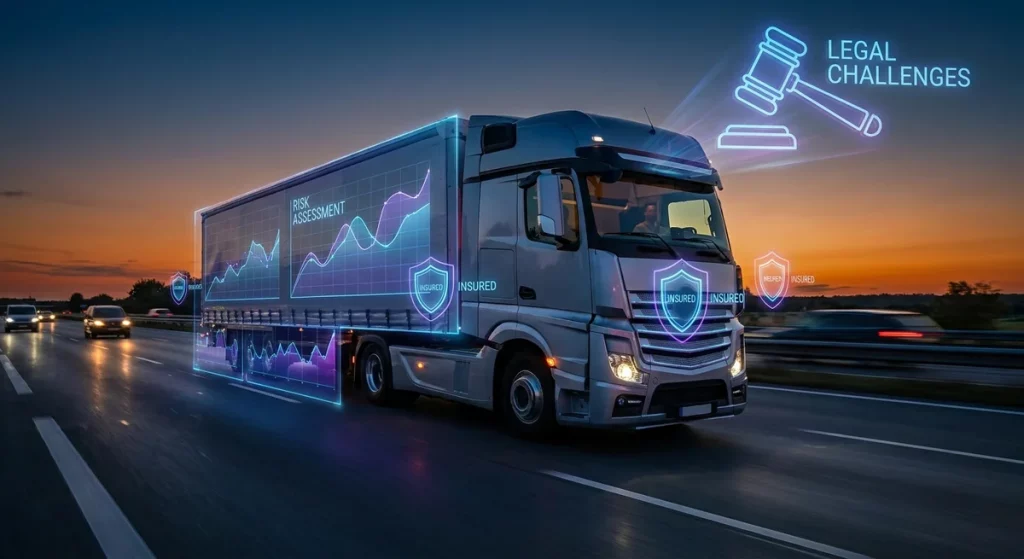
The Double-Hit Facing US Carriers
The US transportation industry is currently navigating a perfect storm. Carriers are being struck by a powerful ‘double-hit’: on one side, astronomical court judgments known as “nuclear verdicts,” and on the other, skyrocketing insurance premiums. Experts at the recent ACT Expo in Las Vegas made one thing clear: without advanced technology and ironclad risk management procedures, trucking companies are facing a real threat of bankruptcy.
The Staggering Rise of Nuclear Verdicts
The statistics reveal a merciless trend. A “nuclear verdict”—defined as a court-ordered settlement exceeding $10 million—increased by a staggering 235% between 2011 and 2019. The financial weight of these judgments has only intensified; the average value of such verdicts against transport companies jumped from $21 million in 2020 to an incredible $51 million in 2024.
According to Alex Leslie of the American Transportation Research Institute (ATRI), several factors are driving these figures:
- Medical inflation.
- Third-party litigation funding.
- Extremely aggressive tactics by plaintiff attorneys in state courts.
In the most serious cases, settlement amounts are growing at an average of 5.7% annually—two to three times faster than the general inflation rate.
From “Check-the-Box” to Real-Time Data
These massive payouts have fundamentally changed how insurance underwriters operate. Logan Payne of Lockton Companies notes that insurers are quick to enter and even quicker to exit the market if they don’t have access to hard, indisputable data. Five years ago, asking about dash cams or telematics was a mere formality on an application. Today, it is a dynamic, real-time conversation.
Insurers no longer just ask if you have the data; they want to know what you are doing with it. They want to see how you train drivers and how you are actively improving safety. In fact, the difference between a 3% and a 12% annual premium increase can often fully fund an investment in a modern vision system.
Technology: A Double-Edged Sword in the Courtroom
While AI assistants and cabin monitors can track driver fatigue—a leading cause of multi-million dollar accidents—technology can be a double-edged sword during litigation:
1. The Absence of Cameras
If you lack camera systems, plaintiff attorneys will argue gross negligence, claiming the company failed to meet basic standards of due diligence.
2. Ignored Data: The Worst-Case Scenario
If a system records dangerous behavior (such as tailgating or phone use) and the safety department fails to take corrective action, the company can be accused of “conscious disregard.” In court, this proves you knew about the risk and chose to do nothing.
Changing the Narrative
The goal of active data management is to shift the courtroom narrative from “corporate negligence” to an “unforeseen incident with a documented history of safety.” Experts warn against including subjective opinions in accident reports. A single thoughtless comment from a safety manager, such as “the driver didn’t brake in time,” can destroy a defense before the case even reaches the docket.
Similarly, inconsistent documentation can be dangerous. A “paper trail” of minor, non-critical notes can be used by lawyers as evidence that a company regularly ignored warning signs. In safety procedures, absolute repeatability and consistency are paramount.
Conclusion: Focus on Severity
Many carriers hope that increasing deductibles will save their budgets. However, the true threat isn’t the frequency of minor fender-benders, but the severity of a single $100 million loss. Without ironclad compliance and full utilization of telematics, the battle in today’s insurance market is lost before it begins.
Safe travels from the team at All About Trucks & TransLab! We put Truckers first!
