
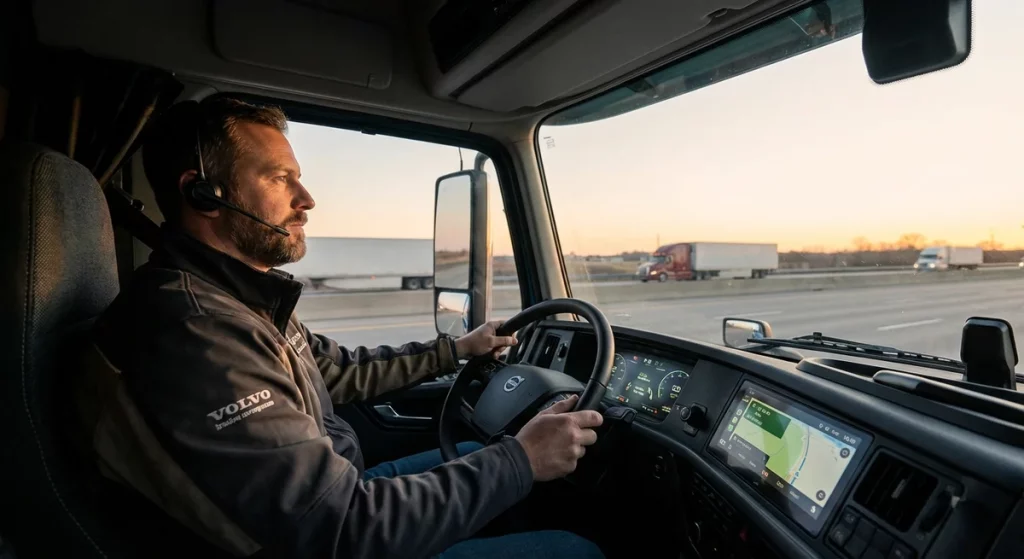
Driving Under Pressure: How Stress Impacts Safety and Performance in the Trucking Industry
Professional CDL drivers, particularly those on long-haul routes, are facing unprecedented pressure in today’s logistics landscape. Long working hours, disrupted circadian rhythms, chronic sleep deprivation, and weeks spent away from loved ones have become the norm. When combined with irregular schedules and the monotony of the open road, these factors lead to a sharp increase in occupational stress. In an era of ongoing labor shortages, the mental health of drivers is no longer just a private matter; it is a significant threat to road safety and delivery reliability.
The Hidden Crisis on Our Highways
The numbers tell a sobering story. A 2023 study found that 72% of truck drivers consider their work physically and emotionally stressful, rating their daily tension levels as moderate to extreme. Given their lifestyle, this is hardly surprising. Approximately 30% of surveyed drivers spend more than 49 hours a week behind the wheel, 63% sleep only six hours or less per day, and 54% are home for less than 24 hours a week.
Despite these challenges, systemic support remains inadequate. While 46% of respondents admit that access to psychological care would help them manage stress, only 40% of men in the profession would actually consider speaking with a therapist.
The Factors Pushing Drivers to the Edge
A 2025 survey sheds light on the specific factors eroding the mental health of drivers. Faced with unrealistic delivery schedules, 26% of drivers admit to regularly speeding just to stay on time. Infrastructure also plays a role: 60% of those surveyed pointed to traffic congestion and roadworks as factors that make their work significantly harder and prevent efficient order fulfillment. Furthermore, the dangerous behavior of other road users—ranging from distracted drivers on phones to those ignoring speed limits—adds another layer of constant anxiety.
The High Cost of Stress
The impact of stress on performance is direct and measurable. In the USA, 68% of drivers say stress negatively affects their driving style, and 76% consider it a primary factor increasing danger on the road. The situation in Europe is even more critical, where 91% of professional drivers admit that stress impairs their performance, and 70% see it as a root cause of dangerous incidents.
The statistics are unforgiving. Data from the National Safety Council shows that in 2023, 5,375 large trucks were involved in fatal accidents—a 43% increase over the last decade. During the same period, collisions resulting in injuries rose by 12%, reaching 114,552 incidents.
How Technology Can Reduce the Burden
To combat this trend, the industry must implement strategies and tools that take the weight off the driver’s shoulders. Modern AI-driven logistical systems can significantly lower stress levels through:
1. Route Optimization
Automated planning that accounts for real-time traffic and roadworks reduces the constant pressure of the clock.
2. Realistic Scheduling
Using machine learning to analyze historical data allows for the creation of delivery plans that are actually achievable without requiring drivers to rush dangerously.
3. System Integration
Replacing scattered apps with a single platform (combining telematics, vehicle control, and navigation) eliminates information overload and helps identify risks before they become problems.
A Smarter Business Calculation
In the face of driver shortages and rising costs, caring for driver well-being is not just an ethical choice—it is a sound business decision. Reducing stress leads to lower employee turnover, fewer accidents, and a stronger bottom line.
Wishing you a wide and safe road ahead from All About Trucks & Translab! We put Truckers first!
