
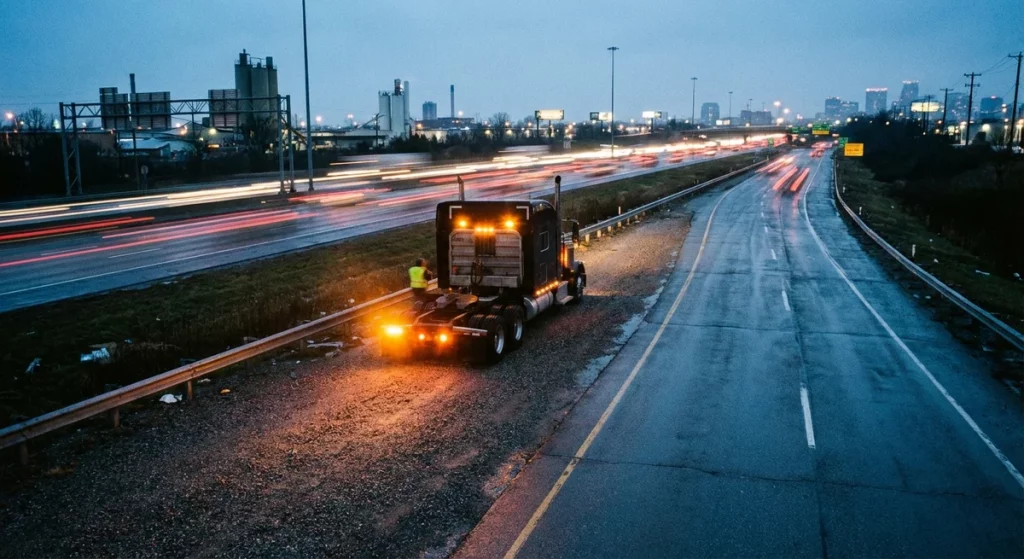
The Invisible Crisis: Why 6 Million Trucks Park on Highway Ramps Every Year
We all know there is a parking problem, but for those behind the wheel of an 18-wheeler, the struggle is personal. It is that familiar, sinking feeling when the Hours of Service (HOS) clock is ticking down, and every rest area or truck stop is already packed to the brim. To get the government to take notice, stories from the road aren’t enough—we need hard data. The latest Altitude by Geotab report provides exactly that, revealing the staggering scale of the national truck parking shortage.
The Cold, Hard Numbers
Based on data collected between November 2024 and October 2025, the report highlights a disturbing reality. In just 12 months, over 2.2 million instances of trucks parking on highway ramps were recorded. When you consider that this data comes from just one telematics provider, the national estimate jumps to approximately 6 million unauthorized ramp stops per year.
No driver chooses to park on an entrance or exit ramp for fun. It is a desperate move driven by a lack of options and the necessity of staying compliant with federal safety regulations. As Geotab’s Nate Veeh points out, drivers are caught in a crossfire: strict 11-hour driving limits on one side, and a decade of economic growth that has far outpaced infrastructure development on the other.
A Deadly Consequence
Ramp parking isn’t just an inconvenience; it is a significant safety hazard. Data from the FMCSA and NHTSA show that roughly 4,000 injury-causing accidents occur annually due to trucks parked on shoulders or ramps, resulting in approximately 300 fatalities every year.
For a passenger vehicle driver merging onto a highway at night or in poor weather, a protruding trailer can be nearly invisible until it’s too late. This creates immense stress for professional drivers and a lethal environment for the motoring public.
The “Black Five” States and Urban Survival
If you drive through the Midwest or the coast, these findings won’t surprise you. The report identifies five states where ramp parking is most prevalent:
- Indiana: The “Crossroads of America,” where four major interstates converge.
- Illinois: A massive freight hub with relentless traffic.
- Tennessee: Facing a surge in population and new distribution centers.
- California: A powerhouse economy that has struggled to provide space for the trucks that fuel it.
- Pennsylvania: A critical corridor for East Coast logistics.
On a city level, finding a spot in Atlanta, Indianapolis, New York City, Washington D.C., and Los Angeles is described as a matter of survival. Urban planners often design cities for residents but forget the trucks required to keep those residents’ refrigerators full.
Is Help on the Way?
There is a glimmer of hope on the horizon. For the first time, the 2026 fiscal year budget has allocated $200 million specifically to address the truck parking crisis. While this is only a fraction of what is truly needed, it represents a vital first step in federal recognition of the problem.
What Can Carriers Do Now?
Until the infrastructure catches up, data is the best tool for survival. Nate Veeh suggests that small and medium-sized fleets should leverage analytics to plan better. Instead of hoping for the best, fleets can use data to identify when specific rest areas typically fill up and adjust routes accordingly.
Additionally, apps like Truck Parking Club—essentially the Airbnb for trucking—are helping drivers reserve space at distribution centers and private lots. Using these tools can mean the difference between a safe night’s sleep and a dangerous night on a ramp.
Final Thoughts
Infrastructure is not a luxury; it is a prerequisite for a safe workplace and safe roads for everyone. With 6 million dangerous stops happening every year, the conversation must shift from “making do” to making changes. At All About Trucks & Translab, we put truckers first. Stay safe out there, and keep those wheels turning.
