
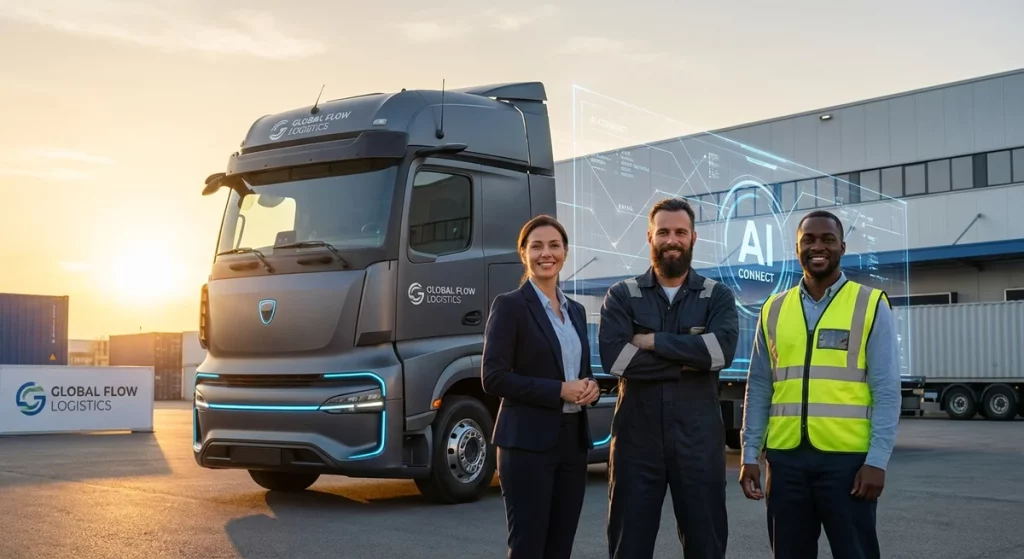
The Heart of the Transport Ecosystem: Growth for Everyone
Today’s insights are dedicated to every professional in the transport industry. Whether you are a business owner, a manager, a mechanic, a driver, or part of the loading and unloading crew, our collective growth is the engine that moves us forward. In an industry as dynamic as ours, staying stationary is not an option.
Leadership in a Shifting Landscape
At All About Trucks and Translab, we believe that a true leader is defined by their ability to guide a team through transformation. Success in modern logistics isn’t solely about well-maintained trucks or seasoned drivers; it’s about the health of the entire ecosystem. Over the past year, the transport sector has undergone rapid shifts that have touched everything from recruitment to core business operations. Today, leadership isn’t just about announcing news—it’s about actively and consciously guiding people through implementation.
Managing Change on a “Living Organism”
Even the most brilliant innovations can lead to chaos if leaders underestimate the management process. As we move deeper into 2026, the pace of transformation is only accelerating. We are seeing a surge in advanced Artificial Intelligence (AI) and new forms of digitalization that demand entirely new skill sets. This challenge spans every level of the organization, from the mechanics in the workshop to the young talents who will eventually take the helm of our companies.
Overcoming the “We’ve Always Done It This Way” Barrier
When analyzing the impact of change, we must acknowledge that emotions play a far greater role than technical specifications. Transitioning to a new operating system is a technical hurdle, but the toughest barrier is often the emotional resistance to letting go of old habits. Routine provides a sense of security.
The “Why” Over the “How”
Fear of the unknown and concerns about increased workloads during transition periods can stall progress. To combat this, an effective leader must explain more than just the “how” of a new process; they must deeply communicate why the change is essential for collective success. When employees understand the purpose, resistance turns into cooperation.
Building a Culture of Ownership and Transparency
The most effective way to secure team commitment is through transparent communication and building a sense of shared ownership. Employees are much more likely to support a transformation when they see how it strengthens the company’s stability and benefits their own roles.
- Early Engagement: Involve your team as early as possible.
- Training and Resources: Provide the tools necessary to succeed in a new environment.
- Differentiating Change: Understand the difference between internal shifts (like new onboarding processes) and external mandates (like federal regulations) to better prepare your strategic response.
The New Face of Recruitment: From Technical Skills to Adaptability
The evolving landscape is drastically changing how we hire. While technical proficiency remains important, it is slowly taking a backseat to flexibility and soft skills. We are no longer just looking for a technician who can turn a wrench or a driver who can shift gears smoothly; we are looking for individuals who embrace continuous development and feel comfortable in a tech-driven world.
Future-Proofing Your Business
To stay competitive, logistics companies must refresh their recruitment messaging. We should emphasize innovation and career paths rather than just job stability. Ultimately, you as a leader play the decisive role. By considering the emotions of your people, you can transform every difficult moment of transition into a successful evolution for your business.
Wishing you a wide and safe road ahead! At All About Trucks & Translab, we put Truckers first!
