
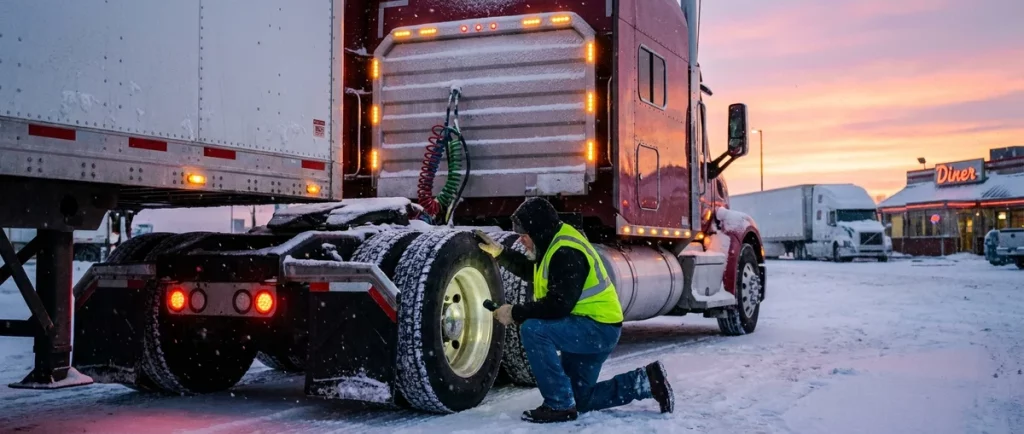
Winter DOT Inspections: How to Stay Compliant and Safe on the Road
Don’t let the few remaining weeks of mild weather in Chicago fool you. Winter is approaching relentlessly, and for truck drivers, being caught off guard is not an option. The first frost and snowfall are more than just a test of your driving precision; they mark the beginning of intense road checks by the FMCSA, State Police, and DOT. Each year, thousands of trucks are placed Out-of-Service (OOS) due to defects that could have been easily avoided with a thorough 15-minute pre-trip inspection.
What Do Inspectors Focus on During the Winter Months?
To protect your business from costly fines and downtime, it is essential to understand exactly what DOT inspectors are looking for when the temperature drops. Here are the critical areas of focus for your winter maintenance and inspection routine.
1. The Braking System Under Heavy Scrutiny
In winter, brake performance is a matter of life and death. Inspectors know that cold temperatures expose every weakness in the system.
- Moisture in the System: An undrained pneumatic system leads to frozen valves in sub-zero temperatures. Draining your air tanks daily is a mandatory winter duty for every driver.
- Hoses and Connections: Air lines and “glad hands” become stiff and prone to cracking in the cold. Inspectors will check for flexibility and leaks at the connection points.
- Brake Adjustment: Uneven brakes on a slippery surface are a recipe for a jackknife. Ensure your brakes are properly adjusted to maintain control during emergency stops.
2. Tires: Tread, Pressure, and Frozen Hazards
Your tires are the only point of contact between your multi-ton rig and the frozen asphalt. During winter, tread depth standards are enforced with extra severity.
- Tread Depth: The minimum is 4/32 of an inch on steer tires and 2/32 on all others. Driving on the edge of these limits in winter is an invitation for a citation.
- Tire Pressure: For every 10°F drop in temperature, tire pressure drops by approximately 1 PSI. Under-inflated tires wear out faster and risk unseating from the rim during maneuvers on ice.
- The “Duals” Danger: Frozen snow and ice trapped between dual wheels are treated as hazardous flying debris. Always clear this space to avoid being flagged for an unsecured load.
3. Visibility and Lighting: Beyond Just Functionality
With shorter days and frequent storms, being seen is your top priority. However, modern technology brings new challenges.
- The LED Dilemma: While LED lights are bright and efficient, they do not generate heat. This means they won’t melt the snow and slush that accumulates on them. You must manually wipe them down regularly.
- Fluid and Glass: Cracked windshields, worn wipers, or a lack of -20°F rated washer fluid can result in an immediate fine during state inspections.
4. ELD Logs and Adverse Driving Conditions
Sudden blizzards or ice storms often make it impossible to reach your destination within your regulated hours. The FMCSA provides some flexibility, but you must use it correctly.
- The 2-Hour Rule: The “Adverse Driving Conditions” exception allows you to extend your driving time from 11 to 13 hours (within the 14-hour window) if the conditions could not have been predicted at the start of the run.
- Proper Annotations: To use this exception, you must provide a detailed annotation in your ELD. A simple “bad weather” note isn’t enough. Be specific, such as: “Unexpected blizzard on I-80, traffic stopped by IDOT.” Note that this usually does not extend the 14-hour work window unless specific federal requirements are met.
Conclusion: Preparation is the Key to Compliance
A winter DOT audit doesn’t have to be stressful. The secret lies in the discipline of daily inspections and ensuring your equipment undergoes professional maintenance before the deep freeze sets in. By staying proactive, you ensure your company remains compliant and your wheels keep turning all year long.
All About Trucks & Translab wish you a wide and safe road! We put Truckers first!
